
BYITC
September 25, 2020 2026-09-08 9:13




About BYITC
After a successful educational journey of 5 years in the UK,
USA, Australia, and UAE, BYITC sets foot in India.
Here, at British Youth International College, we are dedicated to teaching your
children invaluable skills in different areas such as Abacus, English, and Coding.
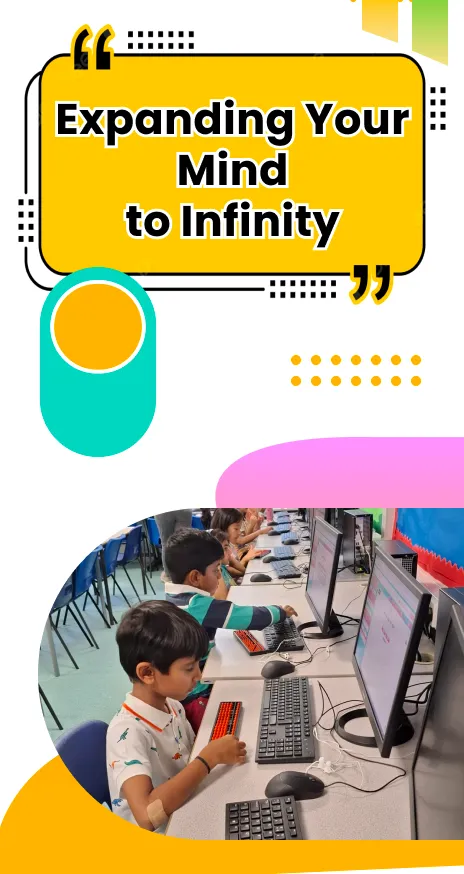
We teach kids in multiple age groups starting from 4 years old to 17 years old
via e-learning through our online software. The courses have been designed,
Know More keeping in mind the school development programs.

Our BYITC Courses


“Youth is tomorrow’s future and if they have the right direction then a country can achieve its full potential.”
At BYITC, we provide dynamic online tutoring programs that help in
guiding your child to become a genius.
- Register Now
- ₹99
Other Activities

Abacus Teacher Training Program
After School Club

Summer/Winter Holiday camp for coding
School Programme

Abacus Maths Challenge Summer/Winter

BYITC Inventors(Calling all young minds)

Dhruv Maheshwari's Seminar
Why Choose BYITC
Our Mission
To help young adults build the right learning foundations for a successful future & bringing back the fun in learning
Our Vision
To provide the best in class learning tools & experience to every student in an interactive & creative environment.
Our Value
Founded by a mother and an educator, BYITC believes in nurturing kids to exceed their full learning potential.

Our Strategy
We break up our program into terms throughout the year and each term consists of approximately 12 classes taught over 3 months. Each class is upto 2 hours long and there are multiple schedules to choose from. This allows your child to learn easily, effectively, and focus on their program to the best of their ability. If you would like to know more about our program or like to enroll your child in our program, please contact us.
Our Latest Posts
Number Skills for Kids: Make Maths Easier with Abacus
Number Skills for Kids is an essential aspect these days. Does your child freeze up when a maths sum lands in front of them? Well, you are not alone. So many parents see this. A child who is bright and curious, but goes quiet the second numbers show up. The good news is, this can change. And it often starts with something small: an abacus. So, Why Do Number Skills for Kids Matter So Much? Think about it. Numbers are everywhere. Counting sweets. Sharing toys. Checking change at the shop. Telling the time. Strong Number Skills build the base for everything that comes later. Without that base, even easy sums feel hard. With it, maths starts to feel normal and even fun. This is why so many parents now turn to abacus classes early on. What is an Abacus, and Why Does it Work? An abacus is a simple tool. Beads on rods and nothing fancy. Kids move the beads to add, subtract, multiply and divide. At first, they use their hands. Then, something clicks. They start to picture the beads in their head. No hands needed and no calculator either. That is Mental Maths for Kids in action. Fast, clear, and correct. Some studies have found abacus-trained children score around 15 to 20% higher on working memory tests than children with no abacus training. That is a big jump for a skill built on beads and rods. What Are the Benefits of Abacus for Number Skills for Kids? Let’s get into it! Keep reading! 1. Builds Real Number Sense Kids on the abacus stop seeing numbers as random shapes. They start to see how numbers connect. Ask a child who has done abacus training what “carrying over” means. They will show you, because they have seen the beads move. 2. Sharpens Mental Maths for Kids Once the abacus lives in a child’s mind, sums speed up. This is proper Mental Maths. Not guessing. Seeing the answer clearly. 3. Boosts Confidence in Class A child who solves a sum fast, and gets it right, feels good. That feeling does not stay in maths class. It spreads. Kids with strong Number Skills often speak up more and try harder things. 4. Makes Maths Feel Like Play Good abacus lessons use games. Timed challenges. Small rewards. Kids do not feel like they are studying. They feel like they are playing. And that is exactly why it sticks. How Does Abacus Training Actually Work? Most courses build up in stages: 1. Number recognition and bead movement 2. Addition and subtraction on the abacus 3. Multiplication and division 4. Mental visualisation, where the abacus lives in the mind 5. Speed and accuracy practice Who Can Learn Abacus? Most children can start from around five years old. It suits: 1. Kids who find maths a bit scary 2. Kids who already like maths and want to go faster 3. Children getting ready for school tests 4. Any child who could do with better focus Simple Tips to Build Number Skills for Kids at Home 1. Practice for 15 to 20 minutes a day. Little and often works best. 2. Use real objects to count before moving to an abacus. 3. Turn sums into small games, not tests. 4. Praise the effort, not just the right answer. 5. Stick with a proper course, so each step builds on the last. Wrapping It Up So, does your child really need to fear maths? Not with the right start. Strong Number Skills for Kids do not come from pressure.They come from steady, daily practice with the right tool. The abacus gives children a hands-on way to understand numbers. Over time, it builds real Mental Maths for Kids, the kind that lasts well beyond the classroom. Start early, keep it fun and see the confidence following. How does an abacus help with maths? Number Skills for Kids improve through abacus learning by helping children visualise numbers, understand calculations, and develop faster mental maths skills. What number skills can kids develop with an abacus? Number Skills for Kids can include counting, addition, subtraction, number recognition, mental calculation, concentration, and greater confidence in maths. Related Articles The Benefits of Mental Maths: Sharpen Your Mind and Build Confidence Abacus Maths Learning in 2026: Why Parents Are Choosing This Smart Learning Method What Parents Should Know Before Choosing the Best Abacus Classes Near Me Top Benefits of Abacus Maths Training for Children’s Brain Development From Beads to Brainpower: How Abacus Boosts Mental Maths in Kids Number skills for kids in Delhi | Number skills classes for kids in Mumbai | Kids number skills classes in Bangalore | Number skills training for kids in Hyderabad | Number skills for children in Chennai | Kids maths and number skills in Kolkata | Number skills classes for kids in Pune | Kids number skills learning in Ahmedabad
STEM Learning for Kids: Complete Beginner’s Guide to Science and Innovation Skills
STEM learning for kids is becoming one of the most effective ways to prepare children for a future driven by technology, creativity, and innovation. Instead of relying only on textbooks, STEM encourages children to explore, ask questions, experiment, and discover solutions through hands-on learning. From building simple models to conducting fun science experiments, STEM helps kids develop practical skills that stay with them for life. Today, STEM education for kids is more than just an academic trend—it’s an approach that nurtures curiosity, builds confidence, and equips children with essential life skills. Whether your child is fascinated by space, robots, nature, or mathematics, STEM makes learning engaging, meaningful, and fun. What is STEM learning for kids? STEM stands for Science, Technology, Engineering, and Mathematics. Rather than teaching these subjects separately, STEM combines them through interactive projects and real-world applications. For example, when children build a paper bridge, they use engineering to design it, mathematics to measure it, science to understand balance and weight, and technology to improve their ideas. This integrated approach makes learning more enjoyable while encouraging children to think critically. Why is STEM Learning Important for Kids? The world is changing rapidly, and many future careers will require skills that go beyond memorization. STEM learning for kids helps children become creative thinkers and confident problem-solvers by encouraging them to explore different possibilities instead of looking for one correct answer. Some of the key benefits include: Develops critical thinking and analytical skills Encourages creativity and innovation Improves logical reasoning Builds confidence through experimentation Strengthens teamwork and communication Promotes curiosity and lifelong learning Prepares children for future careers in science and technology Most importantly, STEM teaches children that failure is simply another step toward finding a solution. STEM Education for Kids in Everyday Life Many parents believe STEM education for kids requires expensive robotics kits or advanced laboratories. In reality, STEM can be introduced through simple daily activities that children already enjoy. Here are a few examples: Cooking teaches measurements, fractions, and chemical reactions. Gardening introduces biology, ecosystems, and environmental science. Building with LEGO or blocks develops engineering and design skills. Solving puzzles strengthens logical thinking. Observing weather patterns helps children understand scientific concepts. These activities make STEM learning natural, practical, and enjoyable without adding pressure. Fun STEM Activities Kids Can Try Children learn best by doing. Here are a few beginner-friendly STEM activities that combine education with fun. Build a Paper Bridge Challenge children to build the strongest bridge using paper and tape. They’ll explore balance, design, and engineering concepts while testing their creativity. Create a Baking Soda Volcano One of the most popular STEM experiments, this activity introduces children to basic chemical reactions in an exciting and memorable way. Coding Games Beginner-friendly coding platforms teach programming through games and puzzles, helping children develop computational thinking and logical reasoning. Nature Exploration Take children outdoors to collect leaves, rocks, or flowers. Encourage them to observe patterns, compare differences, and ask questions like young scientists. LEGO Engineering Challenges Ask children to design a tower, vehicle, or bridge using building blocks. These challenges improve creativity, planning, and engineering skills while keeping learning fun. How Parents Can Support STEM Learning Parents play a significant role in encouraging curiosity. You don’t need a science degree to help your child enjoy STEM learning for kids. Simple ways to support STEM include: Encourage children to ask “why” and “how.” Allow them to experiment without fearing mistakes. Read science books together. Visit museums, science centers, or planetariums. Introduce educational games and STEM toys. Watch documentaries about space, wildlife, or technology. Celebrate curiosity rather than just correct answers. A supportive environment helps children become confident learners who enjoy exploring new ideas. STEM learning for kids is one of the best ways to help children become curious, confident, and future-ready learners. By combining science, technology, engineering, and mathematics through hands-on experiences, STEM develops creativity, critical thinking, and problem-solving skills that extend far beyond the classroom. Whether it’s conducting simple experiments at home, building creative projects, or exploring nature, every STEM activity helps children discover new ideas and build confidence. Investing in STEM education for kids today means preparing them for a future filled with opportunities, innovation, and lifelong learning. Related Articles How Learning Abacus Helps Your Child Excel In STEM? STEM learning for kids in Delhi | STEM classes for kids in Mumbai | STEM education for children in Noida | STEM classes for kids in Ghaziabad
The Benefits of Mental Maths: Sharpen Your Mind and Build Confidence
Benefits of Mental Maths go far beyond the ability to solve calculations quickly. Developing strong number skills can help children improve concentration, memory, logical reasoning, problem-solving abilities, and confidence. It can also make everyday calculations easier and encourage children to approach challenges with a more positive mindset. In a world where calculators and smartphones can solve problems instantly, learning to work with numbers independently remains an important skill. Regular practice can help children understand numbers better while developing cognitive abilities that can benefit them both inside and outside the classroom. What Is Mental Maths and What Are the Benefits of Mental Maths? Mental maths is the ability to perform calculations in your head without immediately depending on a calculator, paper, or digital device. It includes activities such as addition, subtraction, multiplication, division, percentages, estimation, and number comparisons. The purpose is not simply to make children calculate faster. It is about helping them understand numbers, recognise patterns, choose efficient strategies, and think logically when solving problems. With regular and age-appropriate practice, children can gradually become more comfortable with numbers and develop a stronger foundation for mathematical learning. 1. Improves Concentration and Focus Solving calculations mentally requires children to pay close attention to the numbers and steps involved. They may need to remember a number, perform an operation, and keep track of the result without writing everything down. This type of activity encourages children to stay focused and process information carefully. Stronger concentration can also support other areas of learning, including reading, writing, studying, and completing school assignments. 2. Strengthens Memory Mental calculations often require children to hold information in their minds while completing several steps. This can provide regular practice for working memory. For example, when solving a calculation involving multiple operations, a child may need to remember an intermediate answer before continuing. Repeated activities like these can encourage children to retain and process information more effectively. A stronger working memory can be useful across different subjects and everyday situations. 3. Develops Problem-Solving Skills One of the most valuable aspects of working with numbers mentally is learning that there can be different ways to reach the same answer. Children begin to identify patterns and shortcuts instead of relying on a single method. They may learn to break a difficult calculation into smaller parts or use simpler numbers to make a problem easier. This encourages flexible thinking and can help children approach unfamiliar problems with greater confidence. 4. Builds Confidence in Mathematics When children struggle with numbers, they may become hesitant to participate in mathematics-related activities. Successfully solving a calculation can create a sense of achievement and encourage them to keep trying. As children practise and see their progress, they may become more comfortable answering questions and attempting challenging problems. This gradual improvement can help replace the fear of making mistakes with a willingness to learn from them. 5. Encourages Logical and Analytical Thinking Mathematics involves much more than memorising formulas. Children also need to understand relationships between numbers, identify patterns, compare values, and make decisions. For example, understanding that 25 × 4 equals 100 can help children recognise useful number relationships. Similarly, adding 99 can be made easier by adding 100 and subtracting 1. These simple strategies encourage children to think about why an answer works rather than simply memorising it. 6. Makes Everyday Calculations Easier Number skills are useful in many everyday situations. Children encounter numbers when shopping, telling time, measuring ingredients, comparing prices, calculating distances, and managing money. Being comfortable with basic calculations can help them make quick estimates and understand numerical information without always reaching for a calculator. These practical skills can contribute to greater independence as children grow. 7. Encourages a Positive Learning Habit Learning does not always need to involve textbooks and worksheets. Number-based games, puzzles, challenges, quizzes, and everyday activities can make practice more engaging. When children regularly interact with numbers in enjoyable ways, they can begin to see mathematics as something practical and interesting rather than simply another school subject. Short, consistent practice can also be easier to maintain than long and stressful study sessions. How Can Parents Encourage Number Skills at Home? Parents can introduce simple numerical activities into everyday routines without making them feel like formal lessons. For example, ask your child to estimate the total cost of a few grocery items, calculate how much change they should receive, work out how many minutes remain before an activity, or solve a quick number puzzle. Games and challenges can also make practice more enjoyable. The focus should be on encouraging curiosity and reasoning rather than putting pressure on children to answer every question immediately. Consistency is important. A few minutes of enjoyable practice each day can help children gradually become more confident and comfortable with numbers. Conclusion The Benefits of Mental Maths extend far beyond faster calculations. Regular practice can help children strengthen concentration, memory, logical reasoning, problem-solving abilities, and confidence. The goal is not simply to produce quick answers. It is to help children understand numbers, develop effective strategies, and become confident thinkers who are willing to approach challenges. With the right encouragement and consistent practice, children can build valuable numerical skills that support both their academic development and everyday decision-making. Most importantly, learning can become an enjoyable experience that helps children discover that mathematics is practical, engaging, and rewarding. Related Articles Abacus Maths Learning in 2026: Why Parents Are Choosing This Smart Learning Method What Parents Should Know Before Choosing the Best Abacus Classes Near Me Top Benefits of Abacus Maths Training for Children’s Brain Development From Beads to Brainpower: How Abacus Boosts Mental Maths in Kids Benefits of Mental maths classes | Mental maths classes for kids in Delhi | Mental maths classes for kids in Mumbai | Mental maths for children in Bangalore | Mental maths classes for kids in Hyderabad | Mental maths classes for kids in Chennai | Mental maths classes for children in Pune | Mental maths classes for kids in Kolkata | Mental maths […]
What People Say About BYITC
Swara Shimpi

Swara Shimpi
UK
She has shown her potential by improving her reading comprehension massively since she joined and has put a massive effort in improving her work and spellings. Swara is more than ready to be in the next level.
Lee

Lee
UK
It is fun because you get to make your own website and you get all the help you need, it's very useful and it's very clear on what you need to do to make a really
Samarth Kesthur

Samarth Kesthur
UK
Abacus helped Samarth to become faster & accurate in Maths. The courses improved his problem-solving skills, which helped in boosting his confidence.
Umar Mahmood

Umar Mahmood
UK
Umar’s writing and spellings have been brilliant from the past few months. He has put a lot of hard work in his creative writing skills and has been very imaginative. He has put thought into each short story he has created and his punctuation is perfect!